Crypto Guide: Cryptocurrency Exchange
A cryptocurrency exchange is a digital platform that allows users to trade between cryptocurrencies and traditional fiat currencies like the U.S. dollar, euro, or yen.
Whether you’re buying Bitcoin (BTC), Ethereum (ETH), or any other digital assets, cryptocurrency exchanges act as the gateway into the world of crypto, facilitating trades, deposits, and withdrawals.
Choosing the right crypto exchange is a critical step for anyone looking to enter the crypto market. Each platform offers different features, ranging from crypto trading tools and security measures to fee structures and a variety of supported digital assets.
In this guide, we’ll explore the different types of exchanges, their features, and how to choose the right one for your crypto journey.
What is a cryptocurrency exchange?
A cryptocurrency exchange is a marketplace for digital assets. It connects buyers and sellers and allows users to exchange one asset for another.
How does cryptocurrency exchanges work?
Crypto exchanges work by matching buyers and sellers or by routing trades through liquidity pools.
On a centralized exchange, users usually create an account, complete identity verification, deposit funds and trade through an order book. The exchange manages the platform, custody infrastructure, trade execution and user accounts.
Understanding Cryptocurrency Exchanges
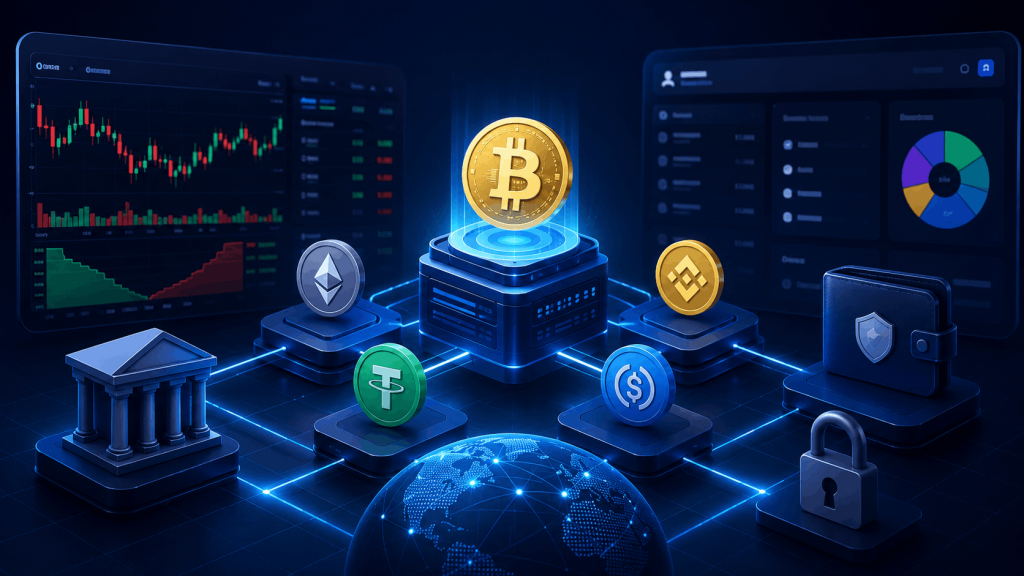
Cryptocurrency exchanges play a vital role in the crypto market, acting as a bridge between fiat currencies like USD, EUR, and JPY, and digital assets such as Bitcoin, Ethereum, and other altcoins. These exchanges facilitate the buying and selling of crypto, allowing users to convert their traditional currency into cryptocurrency, or vice versa. Without crypto exchanges, it would be difficult for most people to access or trade digital assets.
There are two main types of cryptocurrency exchanges: centralized exchanges (CEX) and decentralized exchanges (DEX). Each has its own benefits and risks.
Centralized Exchanges (CEX)
These platforms are managed by a central authority or company, which acts as an intermediary for trades. Examples include Binance, Coinbase, and Kraken. Centralized exchanges often provide more user-friendly interfaces, customer support, and higher liquidity. However, since they hold user funds, they can be vulnerable to hacks and are often subject to regulatory oversight.
- Benefits: High liquidity, faster transactions, better customer support, easier fiat onramps.
- Risks: Vulnerability to security breaches, potential regulatory restrictions, lack of full control over your funds.
Decentralized Exchanges (DEX)
Unlike centralized exchanges, DEXs operate without a central authority. They allow peer-to-peer transactions directly between users through smart contracts. Examples include Uniswap and SushiSwap. DEXs provide more privacy and control over your funds, as you trade directly from your wallet. However, they can have lower liquidity and may not support fiat currency transactions.
- Benefits: Greater control over funds, enhanced privacy, no need for intermediaries.
- Risks: Lower liquidity, limited fiat currency support, potentially more complicated user experience.
Choosing between a centralized and decentralized exchange depends on your priorities, whether you value security, ease of use, or control over your assets.
Centralized exchanges vs decentralized exchanges
| Feature | Centralized exchange | Decentralized exchange |
| Control | Operated by a company | Operated through smart contracts and blockchain protocols |
| Custody | Exchange may hold user funds | User controls funds through a wallet |
| Account setup | Usually requires registration and KYC | Usually requires a compatible crypto wallet |
| Fiat deposits | Often supported | Usually not directly supported |
| Ease of use | Better for beginners | Better for experienced crypto users |
| Customer support | Usually available | Often limited or community-based |
| Trading style | Spot, margin, futures, staking and more | Token swaps, DeFi trading and liquidity pools |
| Main risk | Platform failure, hacks, withdrawal freezes, custodial risk | Wallet mistakes, smart-contract risk, scam tokens, failed transactions |
| Best for | Beginners, fiat onramps, active traders | DeFi users, self-custody users, on-chain traders |
Key Features of Leading Crypto Exchanges
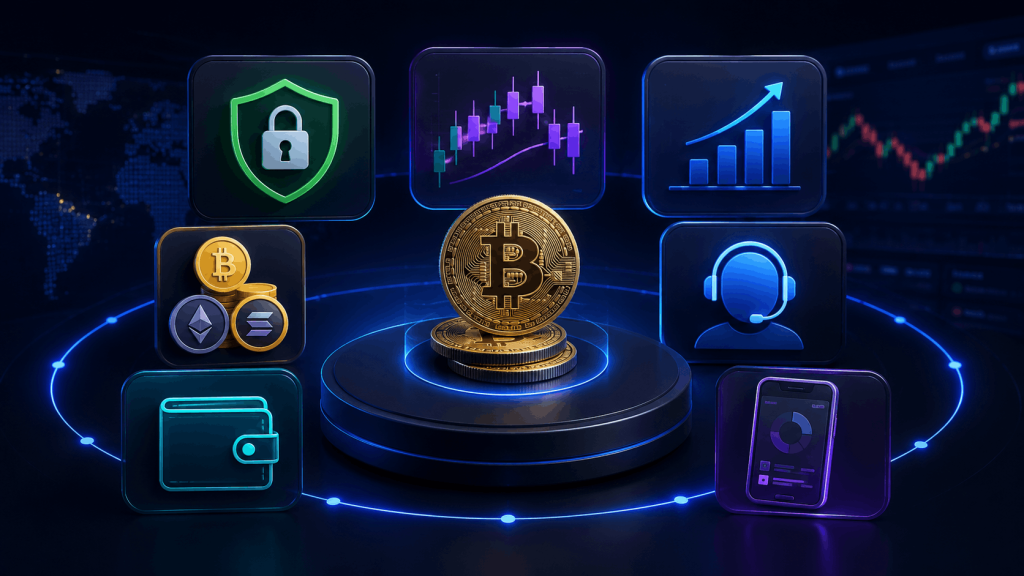
When selecting the best cryptocurrency exchange, it’s important to evaluate a few key features that can significantly impact your trading experience. Whether you’re a beginner or an experienced trader, these essential factors will guide you in choosing the right platform.
Security
Security is a top priority when it comes to crypto trading. Leading crypto exchanges offer robust security measures to protect your assets. Look for features such as:
- Two-factor authentication (2FA) for an extra layer of login security.
- Cold storage to keep the majority of user funds offline, safe from hacking attempts.
- Insurance policies that cover losses due to security breaches, ensuring peace of mind.
Platforms like Coinbase and Gemini are often considered among the best cryptocurrency exchanges because of their high security standards and regulatory compliance.
User-Friendliness
For newcomers, ease of use is crucial. Exchanges like Coinbase and Kraken are known for their intuitive interfaces, making it easy to navigate, buy, and sell crypto. Simple account setup, clear dashboards, and straightforward processes for deposits and withdrawals can make all the difference for crypto traders.
Low Fees
Crypto exchange fees can vary widely, and understanding the fee structure is important. These fees include:
- Trading fees: Typically charged as a percentage of the trade.
- Deposit and withdrawal fees: May apply when moving funds in or out of the exchange.
Platforms like Binance are known for their low trading fees, especially if you use their native token (Binance Coin, BNB) to pay transaction fees. Make sure you compare fees to avoid unnecessary costs, especially if you plan to trade frequently.
Wide Range of Supported Crypto Assets
The best exchanges support a large selection of crypto assets, allowing users to diversify their portfolio. Top exchanges like KuCoin and Crypto.com offer hundreds of coins, from popular cryptocurrencies like Bitcoin and Ethereum to smaller altcoins. This diversity is beneficial for those looking to explore new projects or invest in niche markets.
Trading Pairs and Liquidity
Having access to a variety of trading pairs is essential for traders who want to move easily between different cryptocurrencies. For example, pairs like BTC/ETH or ETH/USDT allow for smooth transitions between popular coins. Higher liquidity is equally important, as it ensures that trades are executed quickly without significant price slippage.
Exchanges like Binance and Kraken offer some of the highest liquidity in the market, making them a great choice for active traders.
When choosing the best crypto exchange, make sure it meets your needs in terms of fees, security, and trading options.
Types of cryptocurrency exchanges
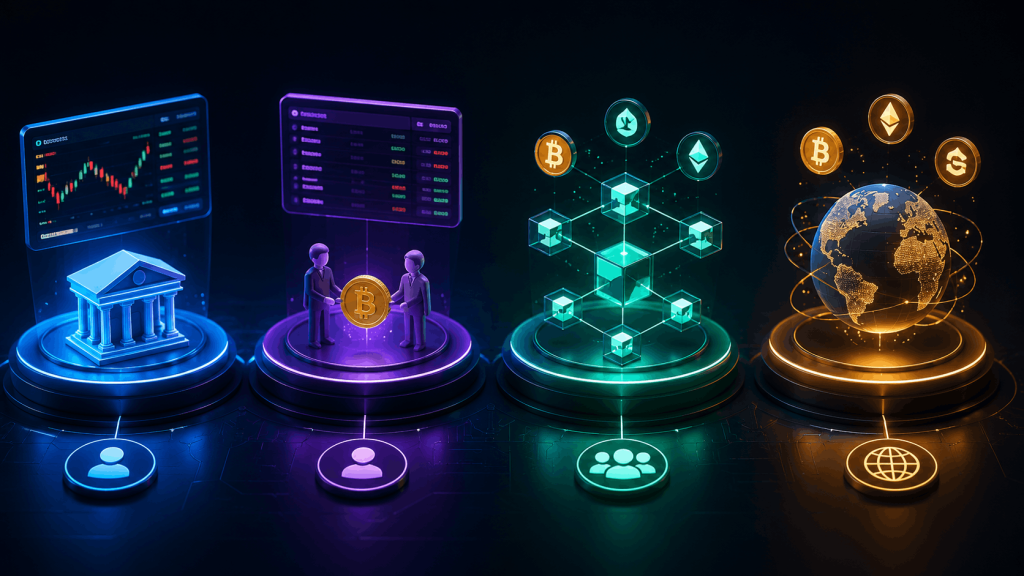
1. Centralized exchanges
A centralized exchange, often called a CEX, is operated by a company. Users create accounts, deposit funds and trade through the platform.
Centralized exchanges are popular because they usually offer:
- fiat deposits and withdrawals
- user-friendly mobile apps
- customer support
- high liquidity
- advanced order types
- institutional trading tools
- account recovery options
compliance and identity verification processes
However, centralized exchanges also introduce custodial risk. If users keep crypto on the platform, they rely on the exchange to safeguard assets, process withdrawals and remain solvent.
Investopedia describes centralized exchanges as platforms that facilitate buying, selling and trading digital assets under a single controlling entity, often offering usability and customer support but also exposing users to risks such as hacks, fraud or operational failure.
2. Decentralized exchanges
A decentralized exchange, often called a DEX, allows users to trade from a crypto wallet without depositing funds into a company-controlled account.
DEXs are common in decentralized finance, also known as DeFi. They are often used to swap tokens, access new assets, provide liquidity or trade on-chain.
DEXs may offer:
- self-custody
- wallet-to-wallet trading
- access to DeFi tokens
- no traditional account login
- on-chain transparency
global access, depending on wallet and network availability
But DEXs also create risks. Users must manage their own wallets, protect private keys, understand gas fees, avoid scam tokens and accept that blockchain transactions are usually irreversible.
A DEX is not automatically safer than a centralized exchange. It removes some risks and adds others.
3. Hybrid exchanges
Hybrid exchanges aim to combine features of centralized and decentralized platforms. They may offer better user control, faster execution, order-book trading or non-custodial settlement.
This category is still evolving. Users should carefully check how custody, withdrawals, settlement and counterparty risk work before using a hybrid model.
4. Peer-to-peer crypto marketplaces
Peer-to-peer, or P2P, crypto marketplaces allow users to buy and sell crypto directly with each other. The platform may provide escrow, dispute resolution and trade matching.
P2P platforms can be useful in countries where banking access is limited or where users want more payment-method flexibility. However, they can carry higher fraud, chargeback and counterparty risks.
Users should only trade with verified counterparties, check transaction history and avoid moving outside the platform’s escrow system.
What can you trade on a cryptocurrency exchange?
The assets available depend on the exchange. Common options include:
| Asset type | Examples |
| Major cryptocurrencies | Bitcoin, Ethereum, Solana, XRP, Cardano |
| Stablecoins | USDT, USDC, DAI |
| Altcoins | Chainlink, Avalanche, Polkadot and others |
| Meme coins | Dogecoin, Shiba Inu and other speculative tokens |
| Tokenized assets | Availability varies by platform and jurisdiction |
| Crypto derivatives | Futures, options or perpetual contracts on selected platforms |
| DeFi tokens | Governance and utility tokens linked to DeFi protocols |
Key Factors to Consider When Choosing a Cryptocurrency Exchange
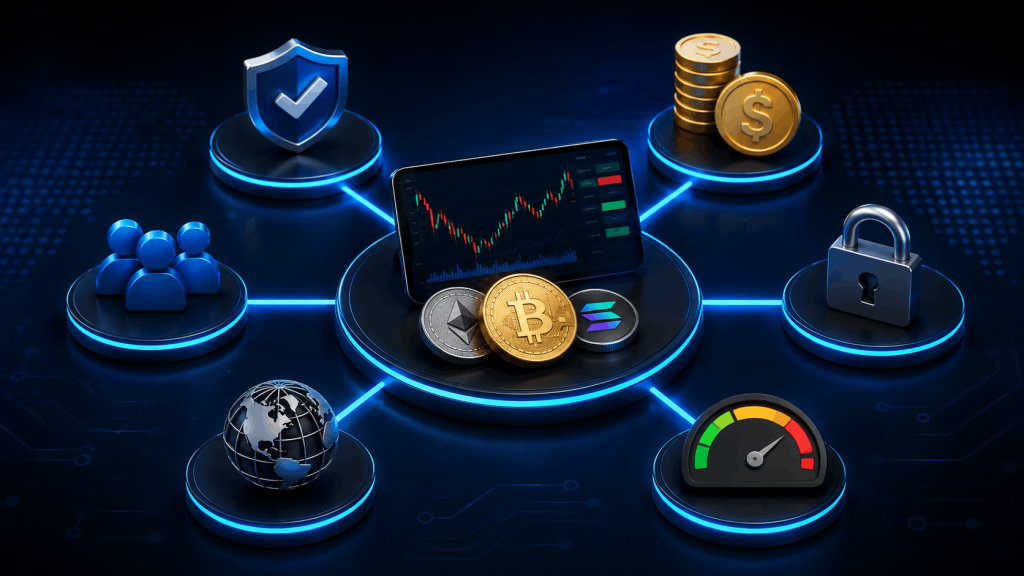
How do you select the best cryptocurrency exchange for you?
When selecting a cryptocurrency exchange, it’s important to evaluate several key factors to ensure you choose a platform that aligns with your needs. Let’s explore some critical features to consider.
Security Features
Security should be a top priority when choosing an exchange. Leading platforms use strong security measures to protect users from potential security breaches.
- Two-Factor Authentication (2FA): This feature requires users to verify their identity with an additional layer of security beyond just a password. It ensures that even if one layer of security is compromised, hackers cannot access the account without the second factor.
- Cold Storage: The best exchanges store the majority of funds in cold storage, keeping them offline and safe from hacking attempts.
- Insurance Funds: Some exchanges, like Coinbase and Binance, offer insurance funds that compensate users in case of a security breach or hack, adding another layer of consumer protection.
Security is crucial for protecting your crypto wallet and digital assets, so ensure the exchange you choose offers these essential protections.
Fees and Costs
Exchanges charge a variety of fees, and understanding these is key to selecting the most cost-effective platform for your trading activity. The most common fees include:
- Trading Fees: These fees are charged per trade and can either be a flat rate or a percentage of the transaction. For example, Binance offers low trading fees starting at 0.1%, while Coinbase typically has higher trading fees around 0.5%-1.49%.
- Deposit and Withdrawal Fees: Some platforms charge fees for depositing or withdrawing funds. These can vary based on the funding method (e.g., bank transfer, debit/credit card) or the asset being withdrawn. For instance, Binance’s withdrawal fees are lower compared to Coinbase, which tends to charge more for both deposits and withdrawals.
- Other Fees: Platforms may charge additional fees for margin trading or using certain services, so make sure to review the complete fee structure before signing up.
Evaluating these crypto exchange fees will help you minimize costs, especially if you plan on trading frequently.
Range of Coins and Trading Pairs
The number of crypto assets supported on an exchange is another critical factor. Some exchanges offer a few dozen coins, while others, like KuCoin and Binance, offer hundreds.
Additionally, the availability of trading pairs is essential for users who want to trade between different cryptocurrencies without converting back to fiat. For instance, exchanges that offer pairs like BTC/ETH or ETH/USDT give traders flexibility in managing their portfolio.
Before choosing an exchange, make sure it supports the cryptocurrency transactions and trading pairs you are interested in.
Ease of Use and Accessibility
A user-friendly platform is crucial, especially for beginners entering the world of crypto. Platforms like Coinbase are designed with simplicity in mind, offering intuitive interfaces and mobile apps that make it easy to navigate, trade, and manage your account.
- Mobile Apps: Many leading exchanges offer mobile apps, allowing users to monitor and manage their portfolios on the go.
- Beginner-Friendly Platforms: If you’re new to crypto, look for exchanges like Coinbase or Kraken that offer educational resources and a straightforward crypto exchange account setup process to guide you through your crypto journey.
A simple, accessible platform will help you focus on your trading strategy instead of struggling with complex features.
Advanced Features for Experienced Traders

For experienced and professional traders, some exchanges offer advanced tools like margin trading, futures trading, staking, and lending. These features allow traders to take on more complex strategies, potentially amplifying both profits and risks.
Margin and Futures Trading
Margin trading allows traders to borrow funds to trade larger positions than their account balance would otherwise allow. This leverage can significantly increase the potential for profit, but it also magnifies the risk of loss. If the market moves against a trader’s position, they may be required to repay more than their initial investment.
- Margin Trading Example: On platforms like Binance and Kraken, traders can borrow funds and trade with leverage of up to 10x or more. For example, if you have $1,000 and trade with 5x leverage, you control $5,000 worth of crypto. However, if the market moves unfavorably, losses can exceed your initial investment.
Futures trading enables traders to speculate on the future price of an asset without owning it directly. It involves betting on whether the price of a cryptocurrency will rise or fall at a specified date. Advanced traders often use futures to hedge other positions or engage in speculative trades.
- Futures Trading Example: A trader could enter a futures contract on Ethereum (ETH), betting that the price will increase over the next month. If ETH rises, the trader profits from the price difference. However, if ETH falls, the trader incurs losses.
Both margin and futures trading offer potentially high rewards but carry significant risks, making them suitable only for advanced traders comfortable with volatility and risk management.
Staking and Lending
Staking allows traders to earn staking rewards by locking up their crypto assets to support the operation of a blockchain. This process is most commonly associated with Proof of Stake (PoS) blockchains, where staked assets help validate transactions and secure the network.
- Staking Example: On exchanges like Binance or KuCoin, users can stake coins like Ethereum (ETH) or Polkadot (DOT), earning rewards over time. These rewards, paid in the staked cryptocurrency, offer a way for traders to generate passive income while holding onto their assets.
In addition to staking, crypto lending allows users to lend their assets to others in exchange for interest. Platforms like KuCoin enable users to lend cryptocurrencies such as Bitcoin (BTC) or Tether (USDT), earning interest from borrowers over a set period.
Both staking and lending provide opportunities for passive income, making them attractive to long-term holders who want their crypto assets to work for them while they wait for price appreciation.
Conclusion
A cryptocurrency exchange can make it easier to buy, sell and trade digital assets, but users should choose carefully. The best platform is not necessarily the one with the most coins, the biggest promotions or the lowest advertised fee.
A safer choice starts with the basics: country availability, transparent fees, strong security, reliable withdrawals, good liquidity, clear custody terms and realistic risk warnings.
You might also like:
Frequently Asked Questions
What is a cryptocurrency exchange?
A cryptocurrency exchange is a platform where users can buy, sell, swap or trade digital assets such as Bitcoin, Ethereum, stablecoins and altcoins.
What is the difference between a centralized and decentralized exchange?
A centralized exchange is operated by a company and usually requires an account. A decentralized exchange allows users to trade directly from a crypto wallet through blockchain-based smart contracts.
Are cryptocurrency exchanges safe?
Some exchanges have strong security controls, but no exchange is completely risk-free. Users can face hacks, phishing, withdrawal delays, platform failures, regulatory changes and market losses.
What is the best cryptocurrency exchange?
The best exchange depends on the user. Beginners may prefer a simple centralized exchange with fiat deposits. Active traders may prefer low fees and high liquidity. DeFi users may prefer decentralized exchanges and self-custody wallets.
Which crypto exchange has the lowest fees?
The lowest-fee exchange depends on trading volume, order type, region, payment method and withdrawal method. Users should compare total costs, including spreads, card fees, withdrawal fees and network fees.
Should I keep my crypto on an exchange?
Keeping crypto on an exchange is convenient for trading, but it creates custodial risk. Long-term holders often move larger balances to self-custody or cold storage after learning proper wallet security.
What is KYC on a crypto exchange?
KYC means “Know Your Customer.” It is an identity verification process where users may need to provide documents before accessing full exchange services.
Can I buy crypto with a credit or debit card?
Many centralized exchanges support card purchases, but card fees are often higher than bank transfers or exchange balance deposits.
What is a crypto trading pair?
A trading pair shows which two assets are being exchanged. For example, BTC/USDT allows users to trade Bitcoin against Tether, while ETH/USD allows users to trade Ethereum against US dollars.
What is liquidity on a crypto exchange?
Liquidity refers to how easily an asset can be bought or sold without significantly affecting its price. Higher liquidity usually means tighter spreads and better trade execution.
What are maker and taker fees?
Maker fees apply when an order adds liquidity to the order book. Taker fees apply when an order matches immediately with an existing order and removes liquidity.
What is a DEX?
A DEX is a decentralized exchange. It allows users to swap crypto assets from a self-custody wallet without depositing funds into a centralized platform.
Is a decentralized exchange safer than a centralized exchange?
Not always. A DEX gives users more control over their funds, but it also introduces risks such as wallet mistakes, smart-contract vulnerabilities, scam tokens and irreversible transactions.
Do crypto exchanges report to tax authorities?
This depends on the country and the exchange. Many jurisdictions are developing or enforcing reporting rules for crypto asset service providers. Users should keep their own transaction records and check local tax rules.
How do I avoid crypto exchange scams?
Use official websites, avoid unsolicited links, enable two-factor authentication, verify withdrawal addresses, avoid unrealistic promotions and research the exchange’s reputation before depositing funds.
 ABOUT THE AUTHOR
See More
ABOUT THE AUTHOR
See More


Sidebar rates

