Forex Brokers Review

With thousands of Forex Brokers operating globally, choosing the right broker can feel overwhelming – especially for beginner traders. A Forex broker plays a critical role in your trading journey by providing market access, processing trades, storing funds, and influencing the overall trading experience.
A reliable Forex Broker can improve execution quality, reduce trading costs, and provide a safer trading environment. On the other hand, the wrong broker may lead to hidden fees, withdrawal issues, poor customer support, or even financial risk. This comprehensive guide explains how Forex broker reviews are compiled and the most important factors traders should evaluate before opening a live trading account.
 | Minimum Deposit: $10 Regulated by: FSC, FSA Crypto: Yes |
What is a Forex Broker Review?
Forex Brokers Reviews are evaluations of a company that provides access to the foreign exchange (Forex) market. It looks at key factors like fees, regulation, trading platforms, spreads, and customer support to help traders choose a reliable broker.
 | Minimum Deposit: $100 Regulated by: CBI, BVI, FSC, ASIC, FSCA, JFSA, FFAJ Crypto: Yes |
The Role of Brokers in Forex Trading
A Forex broker is a financial services provider that acts as the essential gateway between retail traders and the global foreign exchange (Forex) market. In practical terms, brokers enable individuals and institutions to buy and sell currency pairs through electronic trading platforms, without needing direct access to interbank liquidity or large financial institutions.
The Forex market itself is decentralized, meaning there is no central exchange where all transactions take place. Instead, trading occurs through a network of banks, financial institutions, and liquidity providers. This is where brokers play a crucial role: they aggregate pricing from these liquidity providers and present it in a tradable format for clients. Without a broker, most retail traders simply would not have the infrastructure, capital requirements, or connectivity needed to participate in this global market.
Beyond providing access to the market, modern Forex brokers offer a wide range of services designed to support trading activity and improve overall user experience. These services often go beyond simple trade execution and form part of the broader value proposition that differentiates one broker from another.
| Broker Service | Purpose | Why It Matters to Traders |
| Trading platforms | Provide tools to place and manage trades | Directly affects execution speed, usability, and technical analysis capability |
| Educational materials | Teach trading concepts and strategies | Helps beginners build knowledge and improve decision making |
| Research tools | Offer market analysis, news, and signals | Supports informed trading decisions and market awareness |
| Customer support | Assist with technical and account issues | Critical for resolving problems quickly and avoiding trading disruptions |
| Risk management tools | Help control exposure and losses | Essential for protecting capital and maintaining disciplined trading |
| Leverage facilities | Allow larger position sizes with smaller capital | Increases market exposure but also amplifies risk |
Each of these services plays a role in shaping the overall trading environment. While access to the Forex market is the broker’s core function, the quality, stability, and transparency of these additional services often determine whether a broker is suitable for long-term use. Traders who evaluate brokers should therefore look beyond basic trade execution and consider the full ecosystem of tools and support being offered.
 | Minimum Deposit: $10 Regulated by: ASIC, BaFin, CMA, CySEC, DFSA, FCA, SCB 73-89 % of retail investor accounts lose money when trading CFDs Crypto Yes (only CFDs) |
Regulation and Safety of Funds
One of the most critical pillars in any Forex broker review is regulatory compliance and the safety of client funds. Regulation is essentially what separates a professionally supervised financial institution from an unverified or potentially risky trading provider. It establishes a legal framework that brokers must operate within and ensures that traders are offered a baseline level of protection.
A regulated Forex broker operates under the oversight of financial authorities that enforce strict operational, ethical, and reporting standards. These regulators are responsible for ensuring that brokers treat client funds fairly, maintain transparency in their operations, and adhere to rules designed to reduce fraud, manipulation, and misconduct in the financial markets.
When a broker is properly regulated, it means their activities are regularly audited and monitored. This oversight significantly reduces the likelihood of malpractice and helps create a safer trading environment for retail traders.
Major Forex Regulators
Below are some of the most recognized regulatory authorities in the Forex and financial services industry:
| Regulator | Region | Key Strength |
| Financial Conduct Authority (FCA) | United Kingdom | Strong investor protection and strict compliance requirements |
| Australian Securities and Investments Commission (ASIC) | Australia | High transparency standards and robust oversight |
| Cyprus Securities and Exchange Commission (CySEC) | European Union | EU-regulated framework under MiFID II standards |
| Financial Sector Conduct Authority (FSCA) | South Africa | Growing regulatory framework with improving oversight |
| Commodity Futures Trading Commission (CFTC) | United States | Highly stringent regulation with strong enforcement powers |
Each of these regulators imposes its own set of requirements. Still, all share a common goal: ensuring that brokers operate fairly and that clients are protected from unethical or unsafe practices.
 | Minimum Deposit: $25 Regulated by: FSC, MISA Crypto: Yes |
What Regulated Brokers Are Required to Do
Regulated Forex brokers must comply with a range of operational and financial requirements designed to protect clients and maintain market integrity. These obligations form the backbone of investor safety in the Forex industry.
- Keep client funds segregated from company operating funds
- Maintain financial transparency and regular reporting
- Meet minimum capital adequacy requirements
- Follow strict compliance and audit procedures
- Provide defined protections for retail traders
These safeguards are particularly important in situations where a broker becomes insolvent or experiences financial difficulties. Segregated accounts, for example, help ensure that client funds are not used for business expenses and can be returned to traders under regulated procedures.
In addition, capital requirements help ensure that brokers have enough financial stability to continue operating even during volatile market conditions.
Additional Security Features Traders Should Look For
Beyond formal regulation, reputable brokers often implement additional safety and security measures to protect clients and their accounts further.
| Security Feature | Function | Benefit to Traders |
| Two-factor authentication (2FA) | Adds an extra login verification step | Reduces risk of unauthorized account access |
| Secure payment processing | Encrypts deposit and withdrawal transactions | Protects financial data and prevents fraud |
| Know Your Customer (KYC) procedures | Verifies trader identity | Prevents identity fraud and financial crime |
| Negative balance protection | Prevents account balances from going below zero | Ensures traders cannot lose more than their deposit |
These features are not just technical add-ons; they are essential safeguards that enhance trust and stability in the trading environment. Traders should view them as indicators of a broker’s commitment to security and professionalism.
Why Regulation Matters
Trading with an unregulated or lightly regulated broker significantly increases exposure to risks such as fraud, unfair pricing, delayed withdrawals, or even total loss of funds without recourse. Unlike regulated brokers, these entities are not bound by strict financial laws or external audits, which means traders have limited or no protection if issues arise.
For this reason, regulation should always be considered a non-negotiable factor when evaluating a Forex broker. It forms the foundation of trust, transparency, and long-term reliability in the trading relationship between broker and client.
Confirm the Broker’s License
A trustworthy broker should always display licensing information clearly on its website. However, traders should never rely solely on marketing claims. Before opening an account:
- Locate the broker’s registration number
- Verify the license directly on the regulator’s website
- Confirm the license is active
- Check for warnings, suspensions, or penalties
This extra verification step helps traders avoid fake or cloned broker websites.
 | Minimum Deposit: $10 Regulated by: Globally regulated with multiple licences from respected financial regulators. Crypto: Yes |
Comparing and Choosing an Account Type
Forex brokers typically offer a range of account types designed to accommodate different trading styles, experience levels, and risk preferences. Choosing the right account type is an important part of the broker selection process because it directly influences trading costs, execution conditions, and overall flexibility. A well-matched account can make trading more efficient and easier to manage, while a poorly matched one may introduce unnecessary complexity or cost.
For this reason, account comparison is not just about features on paper – it is about aligning a trader’s goals with the structure and conditions that best support their strategy.
Cent or Micro Accounts
Cent and Micro accounts are primarily designed for beginner traders who are still learning how the Forex market behaves in real-time conditions. These accounts allow users to trade with extremely small position sizes, often measured in cents rather than full currency units.
This structure significantly reduces financial risk while still providing exposure to live market conditions. As a result, traders can practice execution, test strategies, and build confidence without risking large amounts of capital. These accounts are especially useful for:
- Learning how leverage works in practice
- Testing trading strategies in a live environment
- Developing emotional discipline under real market conditions
Because of their low-risk nature, Cent and Micro accounts are often considered a transitional step between demo trading and standard live trading.
Standard Accounts
Standard accounts are the most commonly offered account type across Forex brokers and are suitable for both beginner and experienced traders. They operate using standard lot sizes and typically provide a balanced combination of trading conditions, cost structure, and flexibility.
Unlike Cent accounts, Standard accounts involve higher exposure per trade, which makes them more suitable for traders who already understand basic risk management principles. These accounts generally appeal to traders who want:
- Consistent trading conditions
- Moderate to high trading volume capability
- A straightforward cost structure without overly complex pricing models
Because they are widely supported, Standard accounts often serve as the default choice for many retail traders entering the Forex market.
ECN Accounts
ECN (Electronic Communication Network) accounts are designed for more advanced traders who require direct access to liquidity providers. Instead of routing orders through a dealing desk, ECN accounts connect traders directly to the interbank market environment, resulting in faster execution and more competitive pricing.
One of the key advantages of ECN accounts is tighter spreads, which can be especially beneficial for high-frequency trading strategies such as scalping and intraday trading. Typical features of ECN accounts include:
- Direct market access to liquidity providers
- Variable spreads often start near zero
- Commission-based pricing structures
- Faster execution speeds with reduced interference
These accounts are generally preferred by active traders who prioritize execution quality and cost efficiency over simplicity.
Islamic Accounts
Islamic accounts, also known as swap-free accounts, are designed to comply with Sharia law by eliminating overnight interest charges on open positions. In standard Forex trading, holding positions overnight may incur swap or rollover fees, which are considered interest-based. Islamic accounts remove this element entirely to align with religious trading principles.
While the core trading conditions often remain similar to standard accounts, the removal of swap fees makes them suitable for traders who require interest-free trading arrangements. These accounts are commonly used by:
- Traders who follow Islamic finance principles
- Long-term position holders who want to avoid rollover charges
- Clients seeking swap-free trading structures for personal or religious reasons
Islamic accounts provide a practical solution for traders who require interest-free trading while still accessing the same core market conditions as standard accounts. This makes them an inclusive option that ensures trading remains aligned with both financial goals and personal or religious principles.
Key Factors to Evaluate When Choosing an Account Type
When comparing account types across brokers, traders should look beyond naming conventions and focus on the underlying trading conditions that affect real performance.
| Factor | Why It Matters |
| Minimum deposit requirements | Determines accessibility and initial capital needed |
| Spread structures | Directly impacts trading costs and profitability |
| Commission costs | Affects total cost per trade, especially for active traders |
| Available leverage | Influences risk exposure and position sizing flexibility |
| Platform compatibility | Ensures the account works with preferred trading tools |
Each of these elements contributes to the overall trading experience and can significantly influence long-term results. Even two accounts with similar names may perform very differently depending on how these conditions are structured.
 | Minimum Deposit: $50 Regulated by: CySEC, ASIC, FSA, SVG, FSCA Crypto: Yes |
Trading Platforms and Technology
Trading platforms form the foundation of the entire Forex trading experience. They are the digital environment where traders analyze price movements, execute buy and sell orders, monitor open positions, and manage risk in real time. A stable, well-designed platform can significantly improve trading efficiency, while a poorly optimized one can lead to delays, execution errors, and missed opportunities.
Because of this, platform quality is a major factor in any Forex broker review. Beyond simply offering access to the market, brokers are often judged by how reliable, fast, and feature-rich their trading technology is.
Most Forex brokers support a selection of globally recognized trading platforms. Each platform has its own strengths, and the choice often depends on the trader’s experience level, strategy, and technical requirements
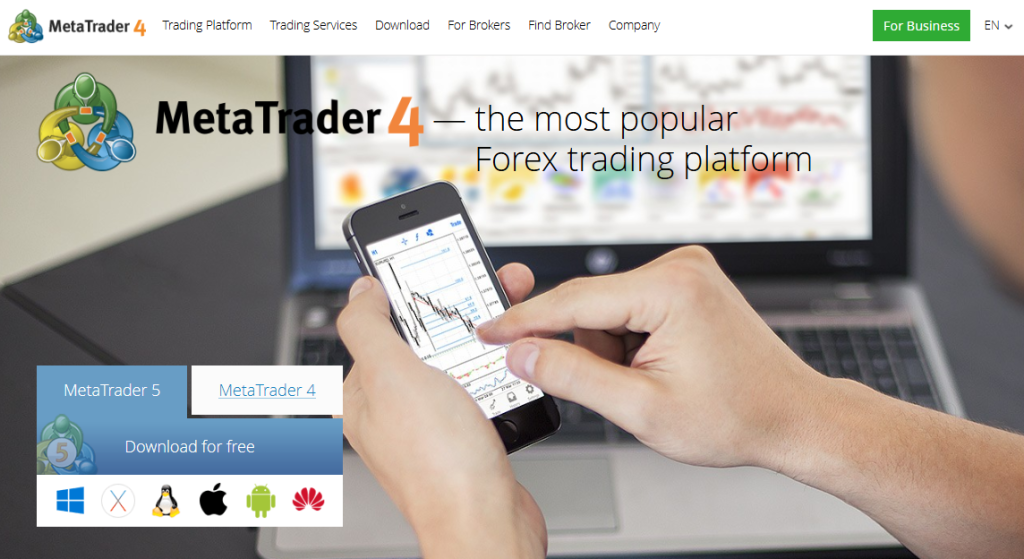
MetaTrader 4 (MT4)
MetaTrader 4 remains one of the most widely used Forex trading platforms in the world. Despite being older than some alternatives, it continues to dominate due to its simplicity, reliability, and extensive community support. MT4 is particularly known for:
- A user-friendly interface suitable for beginners
- A wide range of built-in technical indicators
- Strong support for algorithmic trading through Expert Advisors (EAs)
- Advanced charting tools for technical analysis
Its lightweight structure also makes it highly stable, even on lower-spec devices, which contributes to its continued popularity among retail traders.
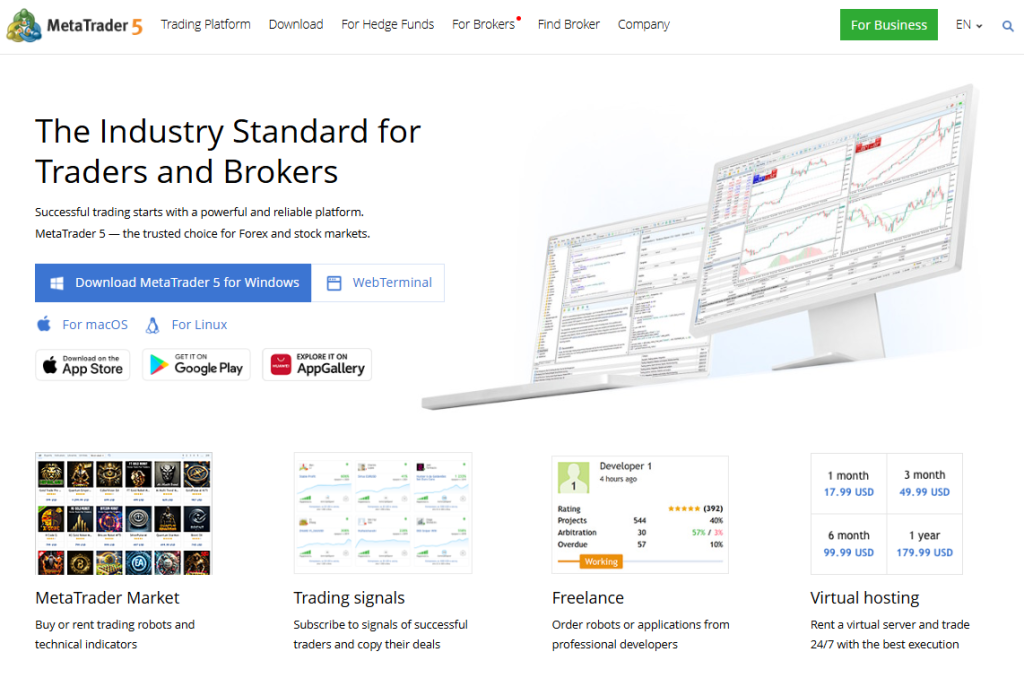
MetaTrader 5 (MT5)
MetaTrader 5 is the upgraded version of MT4, offering a more advanced and flexible trading environment. While it maintains a similar interface, MT5 introduces several improvements designed for more sophisticated trading strategies. Key enhancements include:
- Additional timeframes for deeper market analysis
- More order types for improved trade control
- Enhanced charting tools and technical indicators
- Broader asset class support beyond Forex
MT5 is often preferred by traders who want more analytical depth and access to a wider range of instruments, including commodities, indices, and stocks (depending on the broker).
cTrader
cTrader is a modern trading platform that has gained popularity, particularly among ECN and professional traders. It is designed with a strong focus on transparency, speed, and execution quality. Unlike traditional platforms, cTrader offers a more advanced and visually clean interface, making it appealing to traders who prioritize precision and market depth. It is commonly associated with:
- Fast and transparent trade execution
- Advanced order management tools
- Detailed market depth (Level II pricing)
- A modern, intuitive user interface
Because of these features, cTrader is often favored by scalpers and algorithmic traders who require high-performance execution environments.
TradingView Integration
In recent years, many brokers have integrated TradingView into their platform offerings. TradingView is widely recognized for its powerful charting tools, intuitive interface, and strong social trading community. This integration allows traders to:
- Access advanced charting tools directly from the broker platform
- Share strategies and ideas with other traders
- Use a wide variety of technical indicators and drawing tools
- Analyze markets in a highly visual and customizable environment
TradingView has become especially popular among traders who rely heavily on technical analysis and prefer a more modern, web-based trading experience.

What Traders Should Test Before Choosing a Platform
Before committing real capital, traders need to test a broker’s platform using a demo account. This helps evaluate how the platform performs under real market conditions without financial risk.
| Feature to Test | Why It Matters |
| Execution speed | Determines how quickly trades are opened and closed |
| Platform stability | Reduces risk of crashes or downtime during volatility |
| Mobile compatibility | Ensures trading access on the go |
| Charting tools | Affects quality of technical analysis |
| Order management | Impacts ability to modify, close, or scale trades efficiently |
| Ease of use | Influences overall trading experience and learning curve |
Testing these features in advance allows traders to identify potential weaknesses before committing funds. A platform may look good on paper, but real-time performance is what ultimately determines its reliability.
Comparison of Popular Forex Trading Platforms
To make it easier to compare platforms at a glance, the table below is now organized by platform first, highlighting how each one performs across key trading criteria such as execution quality, usability, and trader suitability.
| Platform | MT4 | MT5 | cTrader | TradingView Integration |
| Best For | Beginner to intermediate Forex traders | Multi-asset and advanced traders | ECN and professional traders | Technical analysts and modern traders |
| Key Strengths | Simple interface, very stable, strong automated trading (EAs), large user community, extensive indicators | More timeframes, more order types, broader asset coverage, improved charting and performance | Fast execution, Level II market depth, advanced order management, transparent ECN environment | Industry-leading charting, cloud-based access, social trading features, highly intuitive interface |
| Limitations | Limited asset classes, older design, fewer advanced order types | Slightly steeper learning curve, some MT4 tools not fully compatible | Smaller broker adoption, fewer custom tools compared to MetaTrader ecosystem | Execution depends on broker integration, not always a standalone trading environment |
| Typical User Profile | New traders Forex-focused users EA users | Experienced traders multi-asset traders strategy diversifiers | Scalpers high-frequency traders execution-focused professionals | Technical traders chart-focused analysts strategy researchers |
| Trusted Broker with Platforms |  |  |  |  |
| Read Review |  | | | |
| Open an Account |  | | | |
Each platform offers a different balance between simplicity, execution speed, and analytical depth. MetaTrader 4 and MetaTrader 5 remain the most widely supported across brokers, while cTrader is often preferred in ECN environments where execution quality is critical. TradingView integration, on the other hand, has become increasingly popular among traders who prioritize advanced charting and community-driven analysis.
Ultimately, the best platform depends on the trader’s style—whether they prioritize automation, execution speed, market analysis, or ease of use.
 | Minimum Deposit: $5 Regulated by: FSC Crypto: Yes (not available under CySEC (EU) or DFSA (MENA). |
Understanding Trading Conditions and Costs
Trading conditions are one of the most important elements in any Forex broker review because they directly influence profitability, execution quality, and long-term trading efficiency. Even a broker with strong regulation and good platforms can become costly or unsuitable if its trading conditions are not competitive or transparent.
For this reason, a proper broker evaluation should always go beyond surface-level features and carefully examine the full cost structure and execution environment offered to traders. When reviewing a Forex broker, several core trading costs and execution factors must be analyzed together rather than in isolation:
- Spreads
- Leverage
- Commissions
- Swap fees
- Slippage
- Execution quality
Each of these elements contributes to the total cost of trading and can significantly affect overall performance depending on the trader’s strategy.
Spreads
The spread is one of the most fundamental trading costs in Forex. It represents the difference between the bid price (sell price) and the ask price (buy price) of a currency pair. In simple terms, the spread is the cost a trader pays to enter a trade. Forex brokers typically offer two main types of spreads:
- Fixed spreads
- Variable (floating) spreads
Fixed spreads remain constant regardless of market conditions, making trading costs more predictable. This can be useful during volatile market conditions when spreads on variable accounts may widen significantly.
Variable spreads, on the other hand, fluctuate depending on liquidity and market volatility. While they can be lower during calm market conditions, they may widen during high-impact news events or periods of low liquidity.
| Spread Type | How It Works | Advantages | Disadvantages |
| Fixed Spreads | Remain constant regardless of market conditions | Predictable costs, easier planning | Often slightly higher on average |
| Variable Spreads | Change based on market liquidity and volatility | Can be very low in stable markets | Can widen significantly during volatility |
Choosing between fixed and variable spreads often depends on trading style. Scalpers and news traders, for example, are more sensitive to spread fluctuations than long-term traders.
Leverage
Leverage allows traders to control larger market positions using a relatively small amount of capital. It effectively amplifies both potential profits and potential losses. The relationship between account balance, leverage, and exposure can be expressed as:
Trade Exposure = Account Balance × Leverage
This means that even a small account can gain significant market exposure when high leverage is applied.
While leverage can be a powerful tool for increasing returns, it also significantly increases risk. If the market moves against a leveraged position, losses can accumulate quickly. For this reason, responsible leverage usage and strong risk management are essential for all traders, especially beginners.
Commission Structures
In addition to spreads, many brokers charge commissions on trades. These costs can vary widely depending on the account type and execution model. Common commission structures include:
- Fixed commission per trade
- Spread-only pricing model
- Hybrid model (lower spreads + commission per lot)
Each model affects trading costs differently. For example, ECN-style accounts often feature tighter spreads but charge a commission per trade, while standard accounts may include costs within the spread itself. High-frequency traders, such as scalpers and day traders, should pay close attention to commission structures because even small per-trade costs can accumulate significantly over time.
Additional Fees
Beyond spreads and commissions, traders may encounter additional hidden or secondary fees that can impact overall profitability if not properly understood. These may include:
- Overnight swap fees for holding positions open
- Currency conversion charges for non-base account currencies
- Inactivity fees for dormant accounts
- Withdrawal processing fees depend on the payment method
While these fees may seem minor individually, they can add up over time, especially for long-term traders or those who trade infrequently.
 | Minimum Deposit: $0 Regulated by: FSCA, FSA, FCA, FSC, CMA Crypto: Yes |
Understanding Broker Execution Models
Forex brokers operate using different execution models, and these models play a major role in determining how trades are processed, how prices are formed, and ultimately how efficiently orders are executed. Understanding these structures is essential when evaluating a broker, as the execution model directly influences trading costs, speed, and transparency.
Each model represents a different way of handling client orders – ranging from internal processing to direct market access – and is generally suited to specific trading styles and experience levels.
Market Maker Brokers
Market Maker brokers operate by creating their own internal pricing for clients. Instead of routing trades directly to external liquidity providers, they act as the counterparty to a trader’s position. In practice, this means the broker sets both the buy and sell prices and may take the opposite side of the trade. Typical characteristics include:
- Internal price creation and execution
- Often offering fixed spreads
- No direct market access for clients
- Simplified trading environment
Market Maker models are often considered suitable for beginner traders because they tend to offer more stable pricing conditions and user-friendly platforms. However, because the broker may act as the counterparty, there can sometimes be concerns about potential conflicts of interest depending on the broker’s practices.
ECN Brokers
ECN (Electronic Communication Network) brokers provide direct access to liquidity providers such as banks, hedge funds, and other market participants. Instead of internal pricing, orders are matched within an external network of liquidity sources. This model is widely regarded as one of the most transparent forms of Forex execution. Key characteristics include:
- Direct access to liquidity providers
- Tighter spreads, often near zero in liquid markets
- Commission-based pricing structure
- High execution speed and transparency
ECN brokers are especially popular among scalpers, algorithmic traders, and high-frequency traders who rely on fast execution and minimal spread costs. Because orders are routed directly to the market, pricing is generally more competitive and reflective of real market conditions.
STP Brokers
STP (Straight Through Processing) brokers route client orders directly to external liquidity providers without manual intervention. Unlike Market Makers, they do not typically create internal pricing, and unlike ECN brokers, they may work with a curated pool of liquidity providers rather than a full open network. Key features include:
- Direct order routing to liquidity providers
- Reduced dealing desk involvement
- Variable spreads depending on liquidity conditions
- Faster execution compared to traditional dealing desk models
STP brokers are often seen as a middle ground between Market Maker and ECN models. They combine elements of both transparency and simplicity, making them suitable for a wide range of traders.
Overview of Execution Models
| Execution Model | How It Works | Spread Type | Ideal For | Key Advantage |
| Market Maker | Broker creates internal pricing and may take opposite side of trades | Often fixed | Beginners | Simple trading environment and stable pricing |
| ECN | Orders matched directly with liquidity providers | Variable, often very tight | Scalpers, advanced traders | High transparency and fast execution |
| STP | Orders routed directly to external liquidity providers | Variable | General retail traders | Balance between transparency and simplicity |
Execution Quality and Trade Reliability
While execution models define how orders are processed, execution quality determines how well those processes perform in real market conditions. Even brokers with strong execution models can deliver poor trading experiences if infrastructure or liquidity access is weak. Poor execution quality can result in several issues that directly impact trading performance:
- Slippage between expected and actual execution prices
- Delayed order processing during fast-moving markets
- Requotes that force traders to accept new prices
- Missed entries or exits during volatile conditions
These issues can significantly affect profitability, especially for short-term strategies.
 | Minimum Deposit: 20 USD (Cent) Regulated by: FSA, FSC, FSCA, CMA, ASIC Crypto: Yes |
What a High-Quality Broker Should Offer
A reliable Forex broker should consistently deliver strong execution performance across all market conditions, including periods of high volatility. Key indicators of strong execution quality include:
- Fast order execution speeds
- Stable and consistent pricing feeds
- Minimal slippage during normal market conditions
- Reliable platform performance during news events
- High fill rates for pending and market orders
Execution reliability is especially important for scalpers, day traders, and algorithmic trading systems, where even small delays or price differences can significantly affect outcomes.
 | Minimum Deposit: $10 Regulated by: FSCA, FSC, FSA Crypto: Yes |
Deposits and Withdrawals
A trustworthy Forex broker should offer a smooth, transparent, and reliable funding process, since this directly affects a trader’s ability to manage capital efficiently. Deposits and withdrawals are often overlooked during broker selection, but they are a key indicator of operational integrity and overall reliability. When evaluating a broker, traders should pay close attention to several important factors:
- Deposit methods available
- Withdrawal speed and processing times
- Transaction fees and hidden costs
- Supported account currencies
- Transparency of payment policies
The overall goal is to ensure that funds can be moved in and out of the trading account without unnecessary delays or complications. A broker that clearly outlines its payment processes and maintains consistent processing times is generally more trustworthy.
Many experienced traders also choose to test a broker’s withdrawal system with a small initial amount before committing larger capital. This helps confirm that payments are processed efficiently and that no unexpected issues arise.
In contrast, brokers that delay withdrawals, apply unclear conditions, or lack transparency around payment procedures should be approached with caution, as these can be early warning signs of operational or trust-related issues.
 | Minimum Deposit: $5 Regulated by: FSC, CySEC, ASIC Crypto: Yes |
Customer Support and Service
Customer support is an often underestimated but highly important aspect of a Forex broker’s overall quality. While trading conditions and platforms tend to receive the most attention, reliable support becomes critical when traders face urgent technical issues, account-related problems, or transaction delays.
A strong customer support system can significantly improve the overall trading experience by ensuring that issues are resolved quickly and efficiently, without disrupting trading activity. A reliable Forex broker should typically provide:
- Live chat support for instant assistance
- Fast email response times for detailed queries
- Multilingual support for global accessibility
- 24/5 availability aligned with Forex market hours
These features ensure that traders can reach assistance whenever the markets are open and that communication barriers are minimized.
When evaluating brokers, it is also important for traders to actively test customer support responsiveness before committing to a live account. This can provide valuable insight into how quickly and effectively issues are handled in real situations. Professional support teams should be capable of assisting with a wide range of trader needs, including:
- Account setup and verification
- Platform installation and troubleshooting
- Deposit and withdrawal enquiries
- General trading and technical questions
Ultimately, high-quality customer support reflects a broker’s commitment to client service and reliability, making it a key factor in overall broker evaluation.
| Minimum Deposit: $10 Regulated by: FSC, FSA Crypto: Yes |
Research Tools and Educational Materials
Educational resources and market research tools help traders improve decision-making and develop trading skills. A strong educational offering may include:
- Webinars
- Trading guides
- Video tutorials
- Market analysis
- Economic calendars
- Trading signals
For beginner traders, especially, accessible and well-structured educational content can greatly improve the learning experience. The best brokers provide educational resources without overwhelming new traders with excessive complexity.
| Minimum Deposit: $100 Regulated by: CBI, BVI, FSC, ASIC, FSCA, JFSA, FFAJ Crypto: Yes |
Forex Broker Warning Signs
Certain behaviors should immediately raise concerns when evaluating a Forex broker, as they often indicate a lack of transparency, weak regulation, or potentially unfair trading practices. Recognizing these warning signs early can help traders avoid unnecessary risk and protect their capital.
While marketing messages may sometimes appear attractive on the surface, it is important to look deeper into how a broker actually operates, especially in areas such as regulation, withdrawals, and client communication.
Common Red Flags Include:
- Guaranteed profit promises
- Aggressive sales tactics
- Unrealistic bonus offers with hidden conditions
- Hidden or unclear fees
- Lack of proper regulation or licensing
- Withdrawal delays or repeated payout issues
- Poor or inconsistent communication
- Pressure to deposit additional funds
These warning signs often appear in brokers that prioritize attracting deposits over maintaining long-term client trust and service quality. In particular, guaranteed profit claims or pressure-based marketing should always be treated as serious red flags, as no legitimate Forex broker can eliminate trading risk.
A professional Forex broker will always operate with clear, transparent communication and realistic expectations. Instead of promising profits or pushing aggressive marketing campaigns, reputable brokers focus on providing stable trading conditions, proper risk disclosures, and reliable client support.
In Conclusion
Choosing a Forex broker should never be rushed. The right broker can improve trading efficiency, reduce unnecessary costs, provide better execution, and create a safer trading environment. Rather than focusing solely on bonuses or high leverage offers, traders should prioritize:
- Safety
- Transparency
- Execution quality
- Customer support
- Reputation
- Long-term reliability
Taking the time to compare brokers carefully and understand how Forex broker reviews are compiled can help traders build a stronger foundation for long-term success in the Forex market.
You might also like:
- NordFX Review
- AvaTrade Review
- Pepperstone Review
- Elev8 Review
- Exness Review
- FISG Review
- XM Review
- HFM Review
- PU Prime Review
- IUX Review
- FBS Review
Frequently Asked Questions
What is a Forex broker?
A Forex broker is a financial services provider that gives traders access to the foreign exchange market. Brokers enable clients to buy and sell currency pairs through trading platforms while also offering tools like leverage, analysis resources, and customer support.
What is a Forex broker review?
A Forex broker review is an evaluation of a broker’s services, including regulation, fees, trading platforms, spreads, execution quality, and customer support. It helps traders compare brokers and choose a reliable trading provider.
Why is regulation important when choosing a broker?
Regulation ensures that a broker operates under strict financial oversight, protecting client funds and enforcing fair trading practices. Regulated brokers must follow rules such as segregating client funds and maintaining financial transparency.
What are the main costs involved in Forex trading?
The main trading costs include spreads, commissions, swap fees, and sometimes additional charges like inactivity or withdrawal fees. These costs vary between brokers and can significantly impact profitability over time.
What is the difference between ECN, STP, and Market Maker brokers?
Market Makers create internal pricing, ECN brokers connect traders directly to liquidity providers, and STP brokers route orders to external providers. Each model affects execution speed, spreads, and trading transparency differently.
Why is trading platform quality important?
A trading platform is where all trading activity takes place. A stable and user-friendly platform ensures fast execution, reliable charting, and smooth order management, all of which are essential for effective trading.
What should traders test before choosing a broker?
Traders should test execution speed, platform stability, deposit and withdrawal processes, customer support responsiveness, and overall ease of use. Demo accounts are commonly used for this purpose.
How important are deposits and withdrawals?
Very important. A reliable broker should offer fast, transparent, and hassle-free deposits and withdrawals. Delays or unclear payment policies can be warning signs of poor reliability or trust issues.
What are the common warning signs of a bad Forex broker?
Red flags include guaranteed profit promises, hidden fees, lack of regulation, aggressive sales tactics, withdrawal delays, and poor communication. These often indicate higher risk or untrustworthy practices.
How do I choose the right Forex broker?
The right broker should be well-regulated, transparent, and offer strong execution quality, fair trading costs, reliable platforms, and good customer support. Comparing multiple brokers using these factors helps ensure a safer and more effective trading experience.
Sidebar rates