Forex Signals: Auto vs. Manual

Auto vs Manual Forex Signals is a common comparison for traders looking to improve their trading strategy. In the fast-moving Forex market, traders often rely on Forex trading signals to identify potential opportunities. However, beginners are frequently unsure whether automated Forex signals or manual trading signals are the better choice. In this guide, we explain how each signal type works, compare their advantages, and help you decide which Forex signal approach best suits your trading style.
6 Best Forex Brokers for Signals Trading (2026)
- IG – Signal Centre, Autochartist and MetaTrader Signals
- Saxo Bank – Autochartist full integration
- CMC Markets – Emerging and Breakout patterns
- Forex.com – Trading Central and MetaTrader Signals
- City Index – Trading Central and MetaTrader Signals
- eToro – Human-generated signals from popular investors
10 Best Forex Brokers – Globally
What Are Forex Trading Alerts?
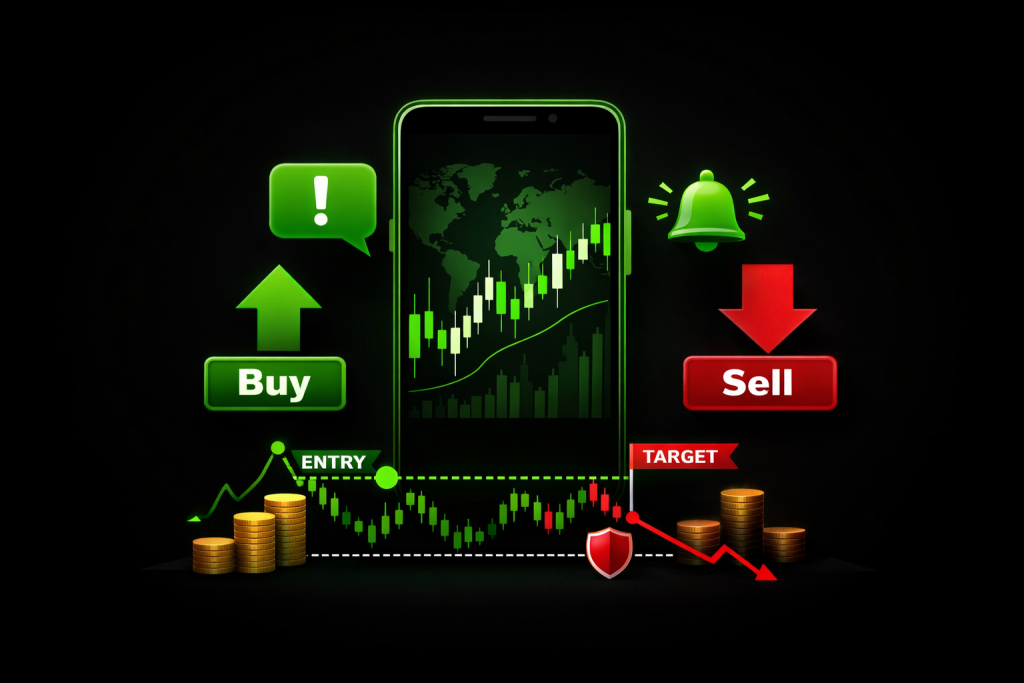
Forex trading alerts are trade recommendations generated through various analytical methods. These alerts provide traders with key information, including entry points, exit levels, and potential market opportunities, helping them execute trades more effectively.
Identifying Forex trading opportunities requires strong market knowledge, time, and technical and analytical skills. However, many traders lack the experience or resources to consistently spot profitable setups, which is why they often rely on Forex signal providers to guide their trading decisions.
 | Minimum Deposit: $250 Regulated by: FCA, ASIC, CFTC, NFA, BaFin Crypto: Yes |
Types of Currency Signals
In the Forex market, traders can access several different types of currency trading signals, but they generally fall into two main categories: manual signals and automated signals. These signals help traders identify potential opportunities by providing clear trade entry and exit points.
Manual Forex trading alerts are created by experienced Forex analysts, market researchers, and professional traders who closely monitor market movements. These experts use their knowledge, technical analysis, and market insights to identify trading opportunities and share them with other traders. In most cases, Forex signal providers offer these alerts through subscription services or commissions.
This creates a mutually beneficial arrangement where traders gain access to valuable Forex trading signals, while providers earn income from sharing their market expertise.

 | Minimum Deposit: $0 Regulated by: FSA, FCA Crypto: Yes |
Advantages of Manual Trade Signals
Better Informed Decisions
Manual trade signal providers carefully research and analyze market conditions before issuing alerts. Experienced analysts monitor chart patterns, financial news, economic data, and broader market trends. Their insights help traders make more informed and confident trading decisions.
Human Insight and Intuition
Even with advanced technology, human judgment remains valuable in trading. Experienced analysts often rely on intuition and market experience when generating signals. When technical indicators produce misleading results, human analysis can help interpret the market more accurately and identify stronger trading opportunities.
Incorporates Fundamental Analysis
Unlike many automated systems that rely mainly on technical indicators and historical data, manual signal providers often consider real-time market developments. This includes economic news, central bank announcements, and geopolitical events, allowing signals to better reflect current market conditions.
Greater Variety in Signals
Automated trading alerts typically follow fixed rules and predefined strategies, which can lead to repeated or similar signals across different systems. Manual signals, however, are generated by individual analysts with unique strategies and perspectives, resulting in a wider range of trading ideas and fewer repeated signals.
 | Minimum Deposit: $0 Regulated by: BaFin, FCA, ASIC, MAS, FMA, IIROC, DFSA Crypto: Yes |
Disadvantages of Manual Trading Signals
Time-Consuming Process
Generating trading signals manually takes considerable time. As a result, this approach may not suit high-frequency traders such as scalpers or day traders. Additionally, analysts or experts often specialize in a single market or a limited number of currency pairs. This means manual signals may not be ideal for traders who prefer to trade a wide range of instruments.
Emotional Trading
Human decision-making can be influenced by emotions. When signals are created manually, there is a greater risk of impulsive or aggressive trading decisions. Signals influenced by greed, stress, anxiety, FOMO, or overconfidence can lead to unfavorable trading outcomes.
Dependency
Many signal providers claim to offer the best trading alerts. However, with manual signals, the overall quality depends on the individual generating them. As a result, a trader’s potential profit or loss may largely depend on the knowledge, experience, and reliability of the signal provider.
Automated FX Trading Alerts
Automated trading signals are buy and sell alerts generated by advanced algorithms, trading robots, and specialized software. These systems analyze real-time market data using technical analysis tools to identify potential trading opportunities.
The signals follow predefined rules and market conditions. Automated systems may rely on indicators such as Bollinger Bands, support and resistance levels, moving averages, RSI, and other technical indicators to generate forex alerts.

 | Minimum Deposit: $100 Regulated by: CIRO, CySEC, NFA, CFTC, CIMA, FCA, FSA, MAS, ASIC Crypto: Yes |
Advantages of Automated Trading Signals
Backtesting
Automated trading systems allow traders to test forex alerts under real market conditions. This makes it possible to evaluate their accuracy and performance over time. Traders can then review the results and adjust the system to better align with their trading strategy and preferences.
Diverse Trading Signals
Although financial markets operate on similar principles, market conditions can vary across asset classes. Automated trading bots can generate signals for multiple markets, including forex, stocks, cryptocurrencies, commodities, and indices. These systems also operate continuously, allowing traders to receive signals 24/7 and trade their preferred instruments at any time.
Fast and Efficient
Algorithm-based forex signals are produced by advanced systems capable of analyzing large volumes of market data within seconds. This enables traders to receive signals quickly and respond to market movements faster. Since these systems rely on programmed rules rather than human judgment, they also help reduce the risk of human error, making them generally more consistent and efficient.

 | Minimum Deposit: $150 Regulated by: CIRO, CySEC, NFA, CFTC, CIMA, FCA, SFC, FSA, MAS, ASIC Crypto: No |
Disadvantage of Automated Trading Signals
Expensive
Advanced trading software and automated signal systems can be costly. Access to these tools often requires paid subscriptions or specialized platforms, which may not be affordable for every trader.
Technical Knowledge Required
Some traders choose to build their own automated systems to generate forex signals, while others rely on third-party software. In either case, a certain level of technical knowledge is usually necessary. Traders often need at least a basic understanding of programming, system settings, and how automated tools operate to use them effectively.
 | Minimum Deposit: $200 Regulated by: FCA, CySEC, MFSA, ADGM, ASIC, FSAS, FinCEN Crypto: Yes |
Manual vs. Automated Trading Signals: Which Is Better?
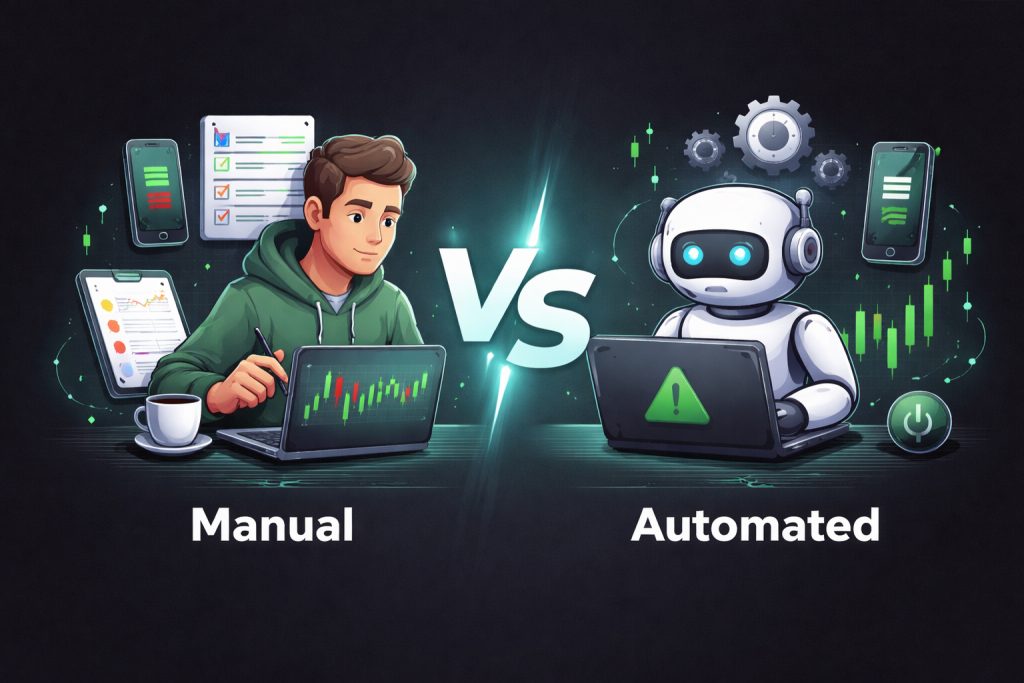
Both manual and automated Forex trading signals offer their own benefits and drawbacks. The best option depends on several factors, including your trading strategy, chosen currency pairs, risk tolerance, available capital, and level of experience.
Manual signals can be a good starting point for beginners and may work well for traders using longer-term strategies such as swing trading or position trading. On the other hand, more experienced traders often prefer automated signals because they can quickly analyze market data and execute trades.
In many cases, combining both manual and automated signals can provide the most balanced approach, allowing traders to benefit from human insight while also leveraging the speed and efficiency of automation.
Pros and Cons of Forex Signals
| ✓ Pros | ✕ Cons |
| Human insight and intuition | Manual signals can be slower |
| Includes fundamental analysis | Emotion can influence decisions |
| Helps beginners learn market logic | Quality depends on the provider |
| Fast automated analysis | Automated tools can be expensive |
| Works across multiple markets | Technical knowledge may be required |
In Conclusion
Manual and automated Forex signals both play an important role in modern trading. Manual signals provide valuable human judgment and market interpretation, while automated systems offer speed, efficiency, and continuous market monitoring.
The best choice depends on your experience level, trading strategy, and available resources. Many traders find that combining manual insights with automated tools creates a balanced approach that improves decision-making while maintaining efficiency.
You might also like:
Frequently Asked Questions
What are Forex trading signals?
Forex trading signals are trade recommendations that provide suggested entry points, exit levels, and market opportunities.
What are manual Forex signals?
Manual signals are created by professional traders or analysts who study market trends and economic events.
What are automated Forex signals?
Automated signals are generated by algorithms or trading software that analyze market data and technical indicators.
Are automated signals better than manual signals?
Not necessarily. Each type has strengths, and the best choice depends on the trader’s strategy and experience.
Can traders use both types of signals?
Yes. Many traders combine automated tools with manual analysis for a more balanced trading approach.
 ABOUT THE AUTHOR
See More
ABOUT THE AUTHOR
See More


Sidebar rates


